
What is AI Automation? A Beginner's Guide 2026
Learn AI automation the easy way—what it is, how it works, and why it matters in 2025. Includes simple examples, tools, and step-by-step tips.
AI AUTOMATION
Mazhiii
4/21/20267 min read
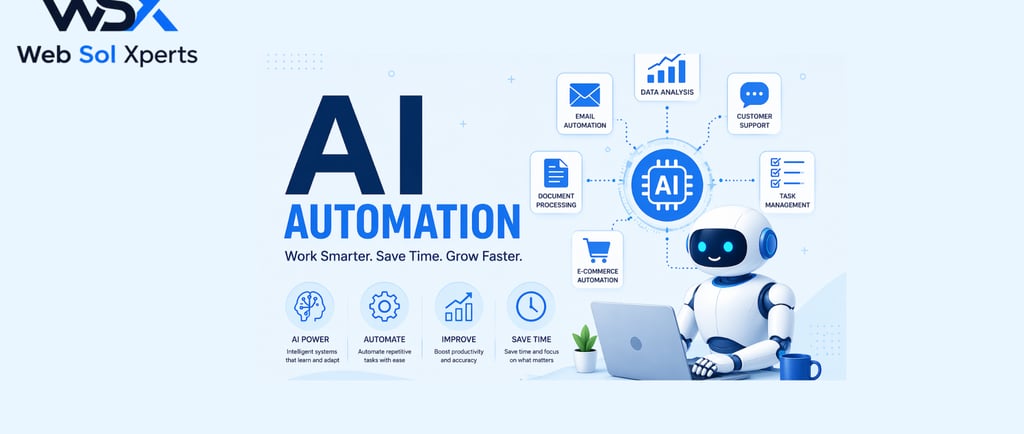
Introduction to AI Automation
Artificial Intelligence (AI) automation is a transformative technology that integrates AI capabilities with automated processes to enhance efficiency and productivity across various sectors. At its core, AI refers to systems or machines that replicate human intelligence in performing tasks, including understanding natural language, recognizing patterns, and making decisions. Automation, on the other hand, involves the use of technology to perform processes with minimal human intervention. When these two concepts converge, they create AI automation, a powerful tool that streamlines operations and drives innovation.
The significance of AI automation in the modern technological landscape cannot be overstated. As businesses strive for efficiency and cost-effectiveness, the implementation of AI automation becomes paramount. It empowers organizations to automate repetitive tasks, allowing human resources to focus on more strategic initiatives. This not only enhances productivity but also improves accuracy and consistency in task execution. The ability of AI systems to learn and adapt further elevates their role in automation, providing insights that lead to informed decision-making and optimized solutions.
In the rapidly evolving technological landscape, AI automation has made noteworthy strides since the early 2020s, and projections for 2026 indicate even more substantial advancements. Organizations are increasingly investing in AI technologies, recognizing their potential to revolutionize traditional business models. From finance to healthcare, AI automation is reshaping industries by enabling real-time analysis, personalized customer interactions, and predictive analytics. As we approach 2026, the synergy between AI and automation is anticipated to unlock unprecedented opportunities for innovation and operational excellence.
How AI Automation Works
AI automation is a sophisticated process that leverages advanced technologies, primarily machine learning, to enhance efficiency and effectiveness across various applications. At its core, AI automation involves training algorithms that can analyze data, identify patterns, and make decisions with minimal human intervention. To understand how this works, it is important to break down the fundamental components of AI systems.
The first step in the AI automation process involves data collection and preparation. Data is the fuel that drives AI algorithms, and it typically comes from a variety of sources, such as user interactions, digital transactions, or sensor outputs. This vast amount of data needs to be cleaned and organized before it can be used effectively. Data preprocessing can include normalization, encoding categorical variables, and removing missing values to ensure that the dataset is suitable for training the algorithms.
Once the data is prepared, machine learning algorithms can be employed. These algorithms are designed to learn from the provided data, identifying correlations and establishing relationships that inform future predictions or classifications. There are various types of algorithms, such as supervised, unsupervised, and reinforcement learning, each serving different purposes depending on the nature of the task.
A significant aspect of AI automation is the role of neural networks, which are computational models inspired by the human brain. Neural networks consist of interconnected layers of nodes (or neurons), where each node processes input data and passes it to the next layer. This structure allows the AI system to capture complex relationships in the data, ultimately enabling it to make nuanced decisions in real-time.
The culmination of these processes results in a highly autonomous system capable of automating repetitive tasks, improving operational efficiencies, and delivering insights that would otherwise remain hidden. Understanding these mechanics is essential as AI technology continues to evolve and shape the future of business and society.
Real-Life Examples of AI Automation
AI automation has permeated various sectors, revolutionizing operational efficiency and enhancing service delivery. In the manufacturing industry, robotic process automation (RPA) is a standout example. RPA utilizes software robots to perform mundane tasks, such as data entry and inventory management. For instance, major automotive manufacturers employ RPA to streamline their assembly line processes, enabling faster production rates while minimizing errors. This application not only increases productivity but also allows human workers to focus on more complex tasks that require critical thinking and creativity.
Another sector witnessing significant benefits from AI automation is healthcare. AI-driven customer service chatbots have emerged as vital tools in patient engagement. Organizations such as hospitals and clinics implement chatbots to handle routine inquiries, appointment scheduling, and preliminary diagnosis assessments. These chatbots utilize natural language processing to interact with patients seamlessly, providing immediate assistance and freeing up healthcare personnel to address more pressing concerns. By improving responsiveness and efficiency, AI in healthcare leads to enhanced patient satisfaction.
Smart home devices exemplify the personalization capability of AI automation in everyday life. Products like smart thermostats and intelligent lighting systems leverage machine learning algorithms to understand user preferences and adapt accordingly. For example, a smart thermostat can learn a homeowner's behavior patterns to optimize energy consumption, thereby achieving cost savings and improving sustainability. This example illustrates how AI automation can transform not only industries but also individual lifestyles through enhanced convenience and increased energy efficiency.
Essential Tools for AI Automation
AI automation is transforming industries by streamlining processes and enabling smarter decision-making. To leverage this potential, various tools and technologies are essential. One of the primary platforms for AI automation is TensorFlow, an open-source library developed by Google. TensorFlow provides comprehensive tools to design, train, and deploy machine learning models. Its flexibility and scalability make it ideal for both research and production environments.
Another notable framework is PyTorch, known for its dynamic computation graph which makes model building intuitive and efficient. It is particularly favored in academia and research settings for its ease of use, allowing developers to debug and experiment more effectively with neural networks.
Programming languages also play a vital role in AI automation. Python stands out due to its simplicity and extensive ecosystem of libraries. It offers numerous frameworks and tools such as Scikit-learn for traditional machine learning algorithms and Keras for building deep learning models, which makes it a popular choice among AI enthusiasts.
When selecting tools for AI automation, understanding the specific needs of a project is imperative. Beginners should consider both the learning curve and the community support available. For instance, while TensorFlow is robust, it might present a steeper learning curve for newcomers compared to PyTorch. Additionally, online forums and tutorials can greatly expedite the learning process, providing invaluable resources.
Automation tools like Apache Airflow, which orchestrates complex workflows, and UiPath for robotic process automation, also contribute significantly to the automation landscape. Ultimately, the right choice of tools will depend on the project requirements, team expertise, and desired outcomes. By carefully selecting the appropriate tools and technologies, anyone can dive into the world of AI automation with confidence and clarity.
Step-by-Step Tips to Start Learning AI Automation
As the world increasingly embraces the power of artificial intelligence, learning AI automation has become essential for both professionals and enthusiasts. If you aim to embark on this journey, following a structured approach can significantly enhance your learning experience. Here are some effective strategies to guide you through the process of mastering AI automation.
Begin by establishing a solid understanding of the foundational concepts of artificial intelligence and machine learning. Numerous online platforms offer courses that cater to beginners. Websites like Coursera, edX, and Udacity provide opportunities to explore subjects such as data analysis, programming languages, and basic algorithms, all of which are crucial for AI automation. Make sure to choose courses that align with your current skill level and learning preferences.
Next, familiarize yourself with programming languages that are integral to AI, with Python being the most widely used. Consider engaging with dedicated online resources or coding boot camps that focus on Python for machine learning and AI. By working through exercises and projects, you will develop practical skills that are vital for AI automation.
Reading books written by industry professionals can also provide valuable insights into advanced topics and applications of AI automation. Titles such as "Hands-On Machine Learning with Scikit-Learn, Keras, and TensorFlow" offer practical examples and comprehensive guidance on utilizing automation techniques in various projects.
Finally, prioritize hands-on experience to solidify your knowledge. Engaging in projects, whether personal or collaborative, will help you apply what you have learned. GitHub is an excellent platform to explore and contribute to existing AI automation projects, allowing you to learn from others in the field. Document your work and process, which will not only serve as a great learning tool but also bolster your professional portfolio.
The Future of AI Automation in 2026
As we look towards 2026, the landscape of AI automation is poised for significant transformation. With rapid advancements in technology, we can anticipate not only the evolution of existing AI tools but also the emergence of new solutions that improve efficiency and productivity across various sectors. From healthcare to finance, businesses are increasingly recognizing the benefits of incorporating AI automation into their operations, leading to a surge in investment in these technologies.
One of the defining trends expected in 2026 is the integration of machine learning algorithms with robotics. This combination can streamline tasks, reduce manual labor, and ultimately boost productivity. Additionally, the enhanced capabilities of AI systems will allow for more personalized customer experiences, through data analysis that predicts consumer behavior and preferences. Such progress indicates a future where companies can operate with higher agility and precision.
However, the rise of AI automation also comes with ethical considerations that must not be overlooked. The potential displacement of jobs due to increased automation raises questions about workforce readiness and the imperative for retraining. As machines take over repetitive tasks, workers will need to evolve, focusing on skills that emphasize creativity, problem-solving, and emotional intelligence—qualities that are inherently human.
For individuals and organizations preparing for this shift, proactive adaptation is crucial. Businesses can create strategies that incorporate ongoing training programs for employees while investing in tools that facilitate smooth integration of AI automation into existing workflows. Individuals may consider upskilling themselves in data analytics and AI technologies to stay relevant in the ever-evolving job market. Through foresight, collaboration, and continuous learning, we can harness the power of AI automation in a manner that benefits society as a whole in 2026.
Conclusion and Call to Action
In conclusion, the discussion surrounding AI automation has highlighted its increasing relevance in both personal and professional domains. With the rapid advancement of technology, understanding the principles of AI automation becomes not just an asset but a necessity for individuals seeking to thrive in the evolving job market of 2026. The integration of AI tools into various workflows is no longer a distant concept; it is a reality that many industries are currently embracing.
Throughout this blog post, we have examined the fundamentals of AI automation, detailing how it operates and emphasizing its impact on productivity, efficiency, and innovation within various sectors. By leveraging AI automation, businesses and individuals can unlock new levels of efficiency, simplifying previously complex tasks and allowing for more time to focus on strategic goals. The importance of being well-versed in AI technologies cannot be overstated, as they represent the future of work and the way we interact with information.
As you consider your own journey into AI automation, we encourage you to take proactive steps. Begin by familiarizing yourself with basic AI concepts and tools that can streamline your processes. Online courses, workshops, and community forums can serve as valuable resources to enhance your understanding and skills. Joining professional networks that focus on technology and automation can provide additional insights and opportunities for collaboration.
We invite you to contribute to the ongoing dialogue about AI automation. Share your experiences and knowledge with others to foster a community that embraces learning and growth in this transformative field. By doing so, you not only enhance your skills but also position yourself as a knowledgeable player in the future landscape of technology.